Thursday, May 14, 2020

HCIA-Transmission H31-311 Training Questions

H31-311 Huawei Certified ICT Associate-Transmission exam is qualified for HCIA-Transmission Certification. PassQuestion provides you with the best and latest HCIA-Transmission H31-311 Training Questions which can guarantee you 100% to pass HCIA-Transmission certification H31-311 exam. To choose PassQuestion you can feel at ease to prepare for your HCIA-Transmission H31-311 exam. 
HCIA-Transmission Certification Exam Summary - Huawei Certified ICT Associate-Transmission

HCIA-Transmission is intended for the development of professionals who possess basic knowledge and skills in transmission network technologies. . HCIA-Transmission certified engineers are able to perform basic configuration of transmission networks, equipment maintenance, and network management for telecom operators or enterprises.
The HCIA-Transmission exam covers Principles of Synchronous Digital Hierarchy (SDH), Wavelength-Division Multiplexing (WDM)Principles, and Optical Transmission Network (OTN) Principles,Multiplex Section Protection (MSP) and Subnetwork ConnectionProtection (SNCP), MSTP Hardware, and service configuration of MSTP equipment, U2000 Introduction and its basic operations.

Huawei H31-311 HCIA-Transmission Exam Outline

1. SDH Principles
1.1 SDH Overview
1.2 SDH Frame Structure and Multiplexing Procedure
1.3 Overheads and Pointers
1.4 Logical Functional Modules
1.5 Application of SDH Trail Layers and Overheads
2. MSTP System Overview
2.1 Introduction
2.2 Cabinets, Subracks, Chassis
2.3 Boards
2.4 Common NE types, Device Functions and Features
3. MSTP Protection Schemes
3.1 Device-Level Protection
3.2 Network-Level Protection
4. Ethernet Principles
4.1 Ethernet Classification
4.2 Ethernet Principles
4.3 Ethernet Port Technologies
4.4 VLAN Basics and Layer 2 Switching
4.5 EoS Concatenation and Encapsulation Technologies
5. Ethernet Service Introduction
5.1 Ethernet Services
5.2 Basic Parameters of Ethernet Services
6. U2000 System Overview
6.1 U2000 System
6.2 U2000 Commissioning and Maintenance Operations
7. WDM Principles
7.1 WDM Overview
7.2 Transmission Media
7.3 Key Technologies
7.4 Technical Specifications
8. OTN Principles
8.1 OTN Interface Structures and Multiplexing Mapping Principles
8.2 Frame Structures and Overheads
8.3 Trail Layers and Maintenance Signals
8.4 Common Alarms and Performance Events and OTN Overheads Application

View PassQuestion HCIA-Transmission H31-311 Training Questions Online

1.When a fiber cut test is performed on a normal MSP ring, which of the following alarms is reported? (Multiple Choice)
A. TU-AIS
B. R-LOS
C. APSJNDI
D. BD STATUS
Answer: BC
2.When a bridge uses the IVL learning mode, the entry in the MAC address table is created according to the source MAC address and source port of the data frame. This entry is valid for all VLANs.
A. TRUE
B. FALSE
Answer: B
3.Compared with a dense wavelength division multiplexing (DWDM) system, a coarse wavelength division multiplexing (CWDM) system provides a certain number of wavelengths and a transmission distance within ( ) km, which greatly reduces system cost and has strong flexibility.
A. 50
B. 100
C. 200
D. 20
Answer: B
4.The SNCP switching speed can be improved if you classify the SNCP services that have the same source, sink, or route into groups.
A. TRUE
B. FALSE
Answer: A
5.The standard Ethernet frame length should not be less than 64 bytes.
Which of the following factors cause this limitation? (Multiple Choice)

A. Minimum transmission distance
B. Maximum transmission distance
C. Working mechanism of conflict detection
D. MAC address
Answer: BC
6.The device IP addresses of the gateway NE and non-gateway NEs must be set in the same network segment.
A. TRUE
B. FALSE
Answer: B
7.Which of the following are the service board types of MSTP devices? (Multiple Choice)
A. Interface board
B. Service processing board
C. Service processing board with interfaces
D. Auxiliary board
Answer: ABC
8.When the LCAS function is used, which of the following overhead bytes are used to transmit control information? (Multiple Choice)
A. M1
B. H4
C. K2
D. K4
Answer: BD
9.Which of the following are the electrical-layer overheads of OTN? (Multiple Choice)
A. OPUk
B. ODUk
C. OCh
D. OTUk
Answer: ABD
10.The working mode of a port determines the flow control mode of the port. 
When the working mode is 100 Mbit/s full duplex, which of the following flow control modes can be used?

A. Auto-negotiation flow control mode
B. Non-auto-negotiation flow control mode
C. Both of the above
D. None of the above
Answer: B

VCP-NV 2020 2V0-41.19 Practice Test Questions

2V0-41.19 VMware Professional NSX-T Data Center 2.4 exam is a hot exam qualifying for VCP-NV 2020 Certification.PassQuestion provides you the gateway to success in actual VMware 2V0-41.19 exam. Our VCP-NV 2020 2V0-41.19 Practice Test Questions are enough to prepare you best for your coming 2V0-41.19 Certification Exam. PassQuestion guarantees that you will be easily able to succeed in your VMware 2V0-41.19 Exam.

2V0-41.19 Exam Overview - VMware Professional NSX-T Data Center 2.4

The Professional NSX-T Data Center 2.4 exam validates an individual can install, configure, setup, maintain, and perform basic troubleshooting of software-defined networks based on VMware’s NSX-T 2.4 Data Center.
The Professional NSX-T Data Center 2.4 exam (2V0-41.19) which leads to VMware Certified Professional-Network Virtualization 2020 certification is a 70-item exam, with a passing score of 300 using a scaled method. Candidates are given an appointment time of 105 minutes, which includes five-minute seating time and adequate time to complete the exam for non-native English speakers. Actual exam time is 100 minutes.

VMware NSX-T Data Center 2.4 2V0-41.19 Exam Sections

Section 1 – Architecture and Technologies
Section 2 – Products and Solutions
Section 3 – Planning and Designing
Section 4 – Installing, Configuring, and Setup
Section 5 – Performance-tuning, Optimization, and Upgrades
Section 6 – Troubleshooting and Repairing
Section 7 – Administrative and Operational Tasks

View Online 2V0-41.19 Free Questions From PassQuestion VCP-NV 2020 2V0-41.19 Practice Test Questions

1.Which two commands are used to query the arp-table of a logical switch? (Choose two.)
A. get logical-switch arp-table
B. get logical-switch arp-table
C. get logical-switch arp-table
D. get logical-switch arp-table
E. get logical-switch arp-table
Answer: AB
2.When a stateful service is enabled for the first time on a Tier-0 Gateway, what happens on the NSX Edge node?
A. SR and DR doesn't need to be connected to provide any stateful services.
B. SR is instantiated and automatically connected with DR.
C. SR and DR is instantiated but requires manual connection.
D. DR is instantiated and automatically connected with SR.
Answer: B
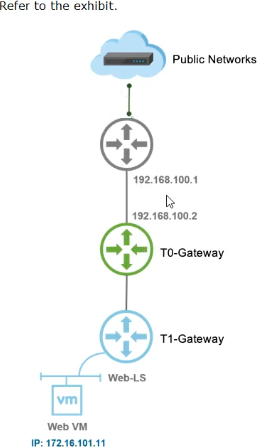
3.Which NAT type must the NSX-T Data Center administrator create on the Tier-0 or Tier-1 Gateway to allow Web VM to initiate communication with public networks?
A. Reverse NAT
B. SNAT
C. 1:1 NAT
D. DNAT
Answer: D
4.A security administrator needs to configure a firewall rule based on the domain name of a specific application.
Which field in a distributed firewall rule does the administrator configure?

A. Policy
B. Profile
C. Service
D. Source
Answer: B
5.What are two supported VPN configuration types in a NSX-Y Data Center? (Choose two.)
A. OpenVPN
B. MPLS
C. L3VPN
D. L2VPN
E. SSLVPN+
Answer: CE
6.An NSX administrator is applying QoS to guarantee bandwidth for critical production workloads.
Which three actions must be taken? (Choose three.)

A. Edit the exported JSON file.
B. Export transport node NIOC profile.
C. Create a QoS segment profile.
D. Specify QoS parameters.
E. Change Segment QoS profile.
F. Upload the JSON file and apply configuration.
Answer: BCD

Wednesday, April 29, 2020

Microsoft Dynamics 365 MB-700 Exam Questions

MB-700 exam is a new Microsoft exam related to Microsoft Certified: Dynamics 365: Finance and Operations Apps Solution Architect Expert certification.The Microsoft MB-700 Exam Questions of PassQuestion can not only help you pass Microsoft Dynamics 365: Finance and Operations Apps Solution Architect exam successfully and consolidate your professional knowledge, but also provide you one year free update service.

MB-700 Exam Overview - Microsoft Dynamics 365: Finance and Operations Apps Solution Architect (beta)

The new Microsoft Certified: Dynamics 365: Finance and Operations Apps Solution Architect Expert certification has one exam that is currently in beta: MB-700: Microsoft Dynamics 365: Finance and Operations Apps Solution Architect. You must also have either the Microsoft Certified: Dynamics 365: Finance and Operations Apps Developer Associate or any Microsoft Certified: Dynamics 365 Finance and Operations Functional Consultant Associate certification.
Solution Architects for Finance and Operations apps in Microsoft Dynamics 365 are trusted advisors who consult with organizations and implementation team members to refine business needs into a well-defined and cost-effective solution.

Microsoft MB-700 Exam Skills Measured

Identify solution requirements (30-35%)
Design solution components (40-45%)
Define solution testing and management strategies (25-30%)

Prerequisites:

Complete one of the following certifications:
Microsoft Certified: Dynamics 365 Finance Functional Consultant Associate(MB-300 MB-310)
Microsoft Certified: Dynamics 365 Supply Chain Management, Manufacturing Functional Consultant Associate(MB-300 MB-320)
Microsoft Certified: Dynamics 365 Supply Chain Management Functional Consultant Associate(MB-300 MB-330)
Microsoft Certified: Dynamics 365: Finance and Operations Apps Developer Associate(MB-300 MB-500)

View MB-700 Free Questions From PassQuestion Microsoft Dynamics 365 MB-700 Real Questions

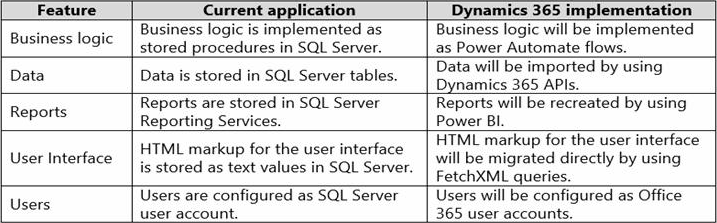
1.A company uses a legacy finance application that runs on a single SQL Server instance. The company plans to implement Dynamics 365 Finance. 
The following table describes the current implementation and design decisions for the new implementation:
You need to identify the gap in the migration plan.
Which requirement should you identify as a gap?

A. Business logic
B. Users
C. User Interface
D. Reports
E. Data
Answer: B
2.A company use Dynamics 365 Business Central.
The company identifies the following issues:
- Users report they cannot perform planning and dispatching of service orders or track bills of material in the system.
- The finance department says that licensing costs are higher than budgeted.
You need to recommend a solution to address the issues.
What should you recommend?

A. Use the Lifecycle Services business process modeler to create service order management and manufacturing tasks in the BPM Library.
B. Perform a fit-gap analysis. Implement service order management and manufacturing business processes and license changes.
C. Configure all users as Business Central Premium users.
D. Ensure that the service order management and manufacturing processes steps are documented in a flow chart.
E. Configure all users as Business Central Essentials users.
Answer: B
3.A holding company with three independently managed and operated subsidiaries is implementing Dynamics 365 Finance.
The company needs to ensure the restriction of data for each company from subsidiary counterparts.
You need to determine an organization structure.
Which structure should you recommend?

A. single legal entity with security policies
B. separate legal entities
C. single legal entity with custom business unit financial dimension
D. single entity that consolidates legal entities
E. single legal entity with default business unit financial dimension
Answer: B
4.A company plans to implement Dynamics 365 Finance + Operations (on-premises). The company has system compliance requirements that must be addressed. You need to design the solution for the company.
What should you address in the design?

A. employee retirement
B. data privacy
C. fair labor standards
D. equal employment opportunity
Answer: B
5.An organization is implementing Dynamics 365 Finance.
The organization uses financial reports including detailed balance information in local currencies for all accounts. Reports must include general ledger account number and journal entry line description. You need to recommend a report that meets the requirements.
Which report should you recommend?

A. Audit Details
B. Summary Trial Balance
C. Balance Sheet
D. Cash Flow 
Answer: A
6.A trading company is concerned about the impact of General Data Protection Regulation (GDPR) on their business. The company needs to define personal data for their business purposes.
You need to define personal data as defined by GDPR.
Which three types of data are considered personal data? Each correct answer presents a complete solution. NOTE: Each correct selection is worth one point.

A. password
B. Social Security number
C. a portion of the address (region, street, postcode etc.)
D. International article (EAN) number
E. MAC address
Answer: ABC

Oracle Autonomous Database 1Z0-931 Dumps

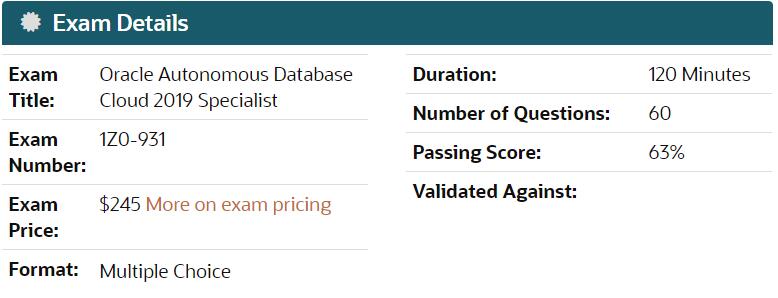
1Z0-931 Oracle Autonomous Database Cloud 2019 Specialist exam is a hot Oracle Certification test. PassQuestion provides Oracle Autonomous Database 1Z0-931 Dumps to help you validate the knowledge and skills to pass Oracle 1Z0-931 exam. You will be well prepared for Oracle 1Z0-931 exam and then successfully pass the 1Z0-931 Oracle Autonomous Database Cloud 2019 Specialist exam.

1Z0-931 Exam Overview - Oracle Autonomous Database Cloud 2019 Specialist

Oracle Autonomous Database Cloud Specialist is a must have certificates for any IT professional working with any cloud technologies.An Oracle Autonomous Database 2019 Specialist has demonstrated the knowledge required to provision, manage, and migrate to Autonomous Transaction Database (ATP) and Autonomous Data Warehouse (ADW).  It is designed for database administrators, monitors, and Dev Ops admins who want to validate their knowledge and skills. 
 
Individuals who earn this certification are able to understand the features and workflows of  Autonomous Database; provisioning and connecting, migration using SQL Developer, Data Pump and Golden Gate, manage and monitor, and understand tools, reporting and analytics using Autonomous Data Warehouse. 

1Z0-931 Exam Topics Covered In Oracle Autonomous Database Cloud 2019 Specialist

Autonomous Database Technical Overview
Migration and Data Loading into Autonomous Database
Monitoring Autonomous Database
Provisioning and Connectivity
Managing and Maintaining Autonomous Database
Tools, Reporting and Analytics using Autonomous Data Warehouse (ADW)

View Oracle Autonomous Database 1Z0-931 Free Questions

1.What are two advantages of using Data Pump to migrate your Oracle Databases to Autonomous Database? (Choose two.)
A. Data Pump can exclude migration of objects like indexes and materialized views that are not needed by Autonomous Database.
B. Data Pump is platform independent - it can migrate Oracle Databases running on any platform.
C. Data Pump is faster to migrate database than using RMAN.
D. Data Pump creates the tablespaces used by your Autonomous Database.
Answer: AC
2.The default eight-day retention period for Autonomous Database performance data can be modified using which DBMS_WORKLOAD_REPOSITORY subprogram procedure?
A. UPDATE_OBJECT_INFO
B. MODIFY_SNAPSHOT_SETTINGS
C. CREATE_BASELINE_TEMPLATE
D. MODIFY_BASELINE_WINDOW_SIZE
Answer: B
3.Which task is NOT automatically performed by the Oracle Autonomous Database?
A. Backing up the database.
B. Mask your sensitive data.
C. Patching the database.
D. Automatically optimize the workload.
Answer: B
4.Which three statements are true about procedures in the DBMS_CLOUD package? (Choose three.)
A. The DBMS_CLOUD.PUT_OBJECT procedure copies a file from Cloud Object Storage to the Autonomous Data Warehouse.
B. The DBMS_CLOUD.CREATE_CREDENTIAL procedure stores Cloud Object Storage credentials in the Autonomous Data Warehouse database.
C. The DBMS_CLOUD.VALIDATE_EXTERNAL_TABLE procedure validates the source files for an external table, generates log information, and stores the rows that do not match the format options specified for the external table in a badfile table on Autonomous Data Warehouse.
D. The DBMS_CLOUD.DELETE_FILE procedure removes the credentials file from the Autonomous Data Warehouse database.
E. The DBMS_CLOUD.CREATE_EXTERNAL_TABLE procedure creates an external table on files in the cloud. You can run queries on external data from the Autonomous Data Warehouse.
Answer: BDE
5.Which of these database features is NOT part of the Autonomous Database?
A. Online Indexing
B. Flashback Database
C. Real Application Clusters (RAC)
D. Java in the Database
Answer: D
6.Which two statements are true with regards to Oracle Data Sync? (Choose two.)
A. Data Sync can connect to any jdbc compatible source like MongoDB, RedShift and Sybase.
B. Data Sync can use a normal OCI (thick) client connection to connect to an Oracle database.
C. Data Sync can load your data in parallel in order to speed up the loading process.
D. Data Sync has default drivers available that supported loading data from DB2, Microsoft SQL Server, MySQL and Teradata.
Answer: AC

Monday, April 27, 2020

AZ-220 Exam Questions - Microsoft Azure IoT Developer

Microsoft AZ-220 exam is a new exam of Microsoft Azure IoT Developer, if you passed this exam, you will be eligible for the Microsoft Certified: Azure IoT Developer Specialty certification.PassQuestion Microsoft AZ-220 Exam Questions will help you prepare for your AZ-220 exam. It covers the exam objectives and topics you will be tested on. PassQuestion Microsoft AZ-220 testing engine simulates the actual exam experience which can help you pass your AZ-220 exam successfully.

Microsoft Azure IoT Developer AZ-220 Exam Information

This Microsoft Certified Azure IoT Developer AZ-220 will provide you with the skills and knowledge required to successfully create and maintain the cloud and edge portions of an Azure IoT solution. It includes full coverage of the core Azure IoT services such as IoT Hub, Device Provisioning Services, Azure Stream Analytics, Time Series Insights, and more. In addition to the focus on Azure PaaS services, it also includes sections on IoT Edge, device management, monitoring and troubleshooting, security concerns, and Azure IoT Central. 
The Azure IoT Developer is responsible for the implementation and the coding required to create and maintain the cloud and edge portion of an IoT solution. In addition to configuring and maintaining the devices by using cloud services, the IoT Developer also sets up the physical devices. The IoT Developer is responsible for maintaining the devices throughout the life cycle.

AZ-220 Exam Skill Measured - Microsoft Azure IoT Developer

Implement the IoT solution infrastructure (15-20%)
Provision and manage devices (20-25%)
Implement Edge (15-20%)
Process and manage data (15-20%)
Monitor, troubleshoot, and optimize IoT solutions (15-20%)
Implement security (15-20%)

View Microsoft Certified: Azure IoT Developer Specialty AZ-220 Free Questions

1. Note: This question is part of a series of questions that present the same scenario. Each question in the series contains a unique solution that might meet the stated goals. Some question sets might have more than one correct solution, while others might not have a correct solution.
After you answer a question in this question, you will NOT be able to return to it. As a result, these questions will not appear in the review screen.
You have an Azure IoT solution that includes an Azure IoT hub, a Device Provisioning Service instance, and 1,000 connected IoT devices.
All the IoT devices are provisioned automatically by using one enrollment group.
You need to temporarily disable the IoT devices from the connecting to the IoT hub.
Solution: From the Device Provisioning Service, you disable the enrollment group, and you disable device entries in the identity registry of the IoT hub to which the IoT devices are provisioned.
Does the solution meet the goal?
A. Yes
B. No
Answer: A
2.Note: This question is part of a series of questions that present the same scenario. Each question in the series contains a unique solution that might meet the stated goals. Some question sets might have more than one correct solution, while others might not have a correct solution.
After you answer a question in this question, you will NOT be able to return to it. As a result, these questions will not appear in the review screen.
You have an Azure IoT solution that includes an Azure IoT hub, a Device Provisioning Service instance, and 1,000 connected IoT devices.
All the IoT devices are provisioned automatically by using one enrollment group.
You need to temporarily disable the IoT devices from the connecting to the IoT hub.
Solution: You delete the enrollment group from the Device Provisioning Service.
Does the solution meet the goal?
A. Yes
B. No
Answer: B
3.You plan to deploy a standard tier Azure IoT hub.
You need to perform an over-the-air (OTA) update on devices that will connect to the IoT hub by using scheduled jobs.
What should you use?
A. a device-to-cloud message
B. the device twin reported properties
C. a cloud-to-device message
D. a direct method
Answer: D
4.You have an IoT device that gathers data in a CSV file named Sensors.csv. You deploy an Azure IoT hub that is accessible at ContosoHub.azure-devices.net. You need to ensure that Sensors.csv is uploaded to the IoT hub.
Which two actions should you perform? Each correct answer presents part of the solution. NOTE: Each correct selection is worth one point.
A. Upload Sensors.csv by using the IoT Hub REST API.
B. From the Azure subscription, select the IoT hub, select Message routing, and then configure a route to storage.
C. From the Azure subscription, select the IoT hub, select File upload, and then configure a storage container.
D. Configure the device to use a GET request to ContosoHub.azure-devices.net/devices/ContosoDevice1/ files/notifications.
Answer: AC
5.You plan to deploy an Azure IoT hub.
The IoT hub must support the following:
- Three Azure IoT Edge devices
- 2,500 IoT devices
Each IoT device will spend a 6 KB message every five seconds.
You need to size the IoT hub to support the devices. The solution must minimize costs.
What should you choose?
A. one unit of the S1 tier
B. one unit of the B2 tier
C. one unit of the B1 tier
D. one unit of the S3 tier
Answer: D

PSM II Exam Questions - Professional Scrum Master II

Want to pass PSM II Professional Scrum Master II Exam? Using PassQuestion PSM II Exam Questions can help you pass the Professional Scrum Master II exam easily. If you are the first time to participate in Scrum PSM II exam, selecting PassQuestion PSM II Exam Questions will increase your confidence of passing the exam and will effectively help you pass the PSM II exam.

PSM II Exam Overview - Professional Scrum Master II

The Professional Scrum Master level II (PSM II) assessment is available to anyone who wishes to demonstrate his or her ability to apply the Scrum framework to solving advanced, complex problems in the real world. Those that pass the assessment will receive the industry recognized PSM II Certification as an indication of their advanced knowledge and abilities pertaining to Scrum and the role of the Scrum Master.

Professional Scrum Master II Exam Details

Fee: $250 USD
Passing score: 85%
Time limit: 90 minutes
Number of Questions: 30 (partial credit provide on some questions)
Difficulty: Advanced
Format:  Multiple Choice, Multiple Answer and True/False
Language: English only

PSM II Professional Scrum Master II Exam Subject Areas

Scrum Framework
Scrum Theory and Principles
Teams
Coaching and Facilitation
Done and Undone 
Maximizing Value 
Product Backlog Management
Scaling Fundamentals

The Difference Between PSM I And PSM II Exams

PSM I is perfect for people who want to understand the basics of Scrum thoroughly. The training and study required prior to the assessment make sure that you are comfortable using internationally recognized terminology for Scrum approaches.
PSM II is the next step for people who want to take it further. It goes beyond being able to evidence that you understand Scrum, and shows that you can use it in the workplace.
PSM I is a prerequisite for taking the PSM II assessment. The second Professional Scrum Master level builds on what is assessed at Level 1, so you need to have successfully taken and passed the PSM I assessment before moving on to the PSM II exam.

View Professional Scrum Master II PSM II Free Questions

1.A Scrum Master is not only a servant-leader to the Scrum Team and organization, it's also considered a management position.
Which three activities describe what a Scrum Master manages as reflected by the Scrum Guide? (Choose three.)

A. Reporting on the performance of the Sprint.
B. The way Scrum is understood and enacted within the organization.
C. Managing the capacity and utilization of each Development Team member.
D. Managing the process in which Scrum is applied.
E. Managing the Product Backlog items and work in the Sprint Backlog.
F. Removing organizational impediments that limits the team’s progress and productivity.
Answer: BDF
2.An organization has just hired you as a new Scrum Master to help them transition their teams from their current traditional process to Scrum. The teams are currently structured to specialize in a single function. This is also known as component teams where a team would only address a single layer (i.e. design, frontend, backend, database, testing, etc.). You've introduced the concept of cross-functional teams where all the skills needed to produce business functionality, from end to end, are inside of a single team.
What should you keep in mind when transitioning from siloed teams to cross-functional teams? (Choose two.)

A. It is easier to compare the performance between cross-functional teams in order to identify to which teams to assign tasks and which teams need additional coaching.
B. Newly formed teams will need time to stabilize before reaching their peak performance. During the initial stages of forming, performance will suffer and productivity may be low, although even then delivery of business value is still likely to increase.
C. Without feature teams, you cannot do Scrum. Postpone Scrum adoption until the teams are reorganized in feature teams.
D. People from the different layers and components will need time to become accustomed to working and delivering unified functionality together as one Scrum Team thus productivity may suffer.
Answer: BD
3.Paul is a Product Owner for multiple products. Each product is allocated a dedicated Scrum Team and a set budget. Based on the average velocity of a previous product release, Paul had estimated a new product to take 9 Sprints to complete. The average velocity of the previous product release was 50 completed units of work per Sprint. Over the first 3 Sprints, the Development Team reported an average velocity of 40 completed units per Sprint, while not fully completing the required integration tests. The Development Team estimates that integration testing would require additional effort to make the increments shippable. The Development Team is unsure if the required velocity is achievable.
What is the most effective way to recover?

A. In the next Sprints, the Development Team strives to make the selected work as close to ‘done’ as possible and at the minimum 90% completed. Any undone work is divided into new Product Backlog Items that will be deferred to the last Sprint in order to maintain stable velocity.
B. The Development Team informs Paul that the progress he has perceived to date is not correct. The Increment is not releasable. They give Paul their estimate of the effort it would take to get the previous work ‘done’, and suggest doing that work first before proceeding with new features. The team also re estimates the effort to make the remaining Product Backlog items ‘done’, including all integration effort. In the end, it is Paul’s call to continue the project or to cancel.
C. The Scrum Master will manage the Sprint Backlog and assign work to the Development Team members to ensure maximum utilization of each member. He/she will keep track of unused resources so that it does not impact the budget. Unused budget can be allocated for additional Sprints if needed.
D. The Scrum Master sets the open work aside to be performed in one or more release Sprints. They remind Paul to find funding for enough Release Sprints in which this remaining work can be done. Up to one release Sprint per three development Sprints may be required. It is Paul’s role to inform users and stakeholders of the impact on the release date.
Answer: B
4.Paul, a Product Owner of one of the Scrum Teams, has been attending the Daily Scrum. During the Daily Scrum, the Development Team members have been reporting their daily work to Paul so that he is aware of their Sprint progress and what each member is working on.
What is the best action for the Scrum Master to take?

A. Ask Paul to stop attending the Daily Scrum.
B. Coach Paul and Development Team members on the purpose of the Scrum events and let them figure out what to do in this situation.
C. Allow the Paul to participate in the Daily Scrum as he is responsible for the success of the product.
D. Facilitate the Daily Scrums to avoid any conflicts between the Development Team members and Paul.
Answer: B
5.Steven, the Scrum Master, is approached by one of the Development Team members saying that they are not completing regression tests for all of the work they are performing to the level defined in the Definition of Done. They have discussed this with the Product Owner and decided to remove regression testing from the Definition of Done.
Which two actions are the most appropriate for Steven to take? (Choose two.)

A. Reject the decision as the long term maintainability of the product will be negatively impacted by modifying the Definition of Done.
B. Accept the decision as a mutual agreement has been made between the Development Team and the Product Owner.
C. Ask the Development Team and the Product Owner what problem they are trying to solve by altering the Definition of Done and removing regression testing from it. In what ways will this decision impact transparency and quality?
D. Ask the Development Team and the Product Owner if they are still able to produce potentially shippable product increments by altering the Definition of Done?
Answer: CD

Saturday, April 25, 2020

AWS Certified Cloud Practitioner CLF-C01 Exam Dumps

AWS Certified Cloud Practitioner is the newest basic level certification exam provided by Amazon Web Services. PassQuestion provides you the latest AWS Certified Cloud Practitioner CLF-C01 Exam Dumps which contain actual exam structure and contents for your exam preparation. The information of PassQuestion can ensure you pass your exam in the first time to participate in the AWS Certified Cloud Practitioner exam.

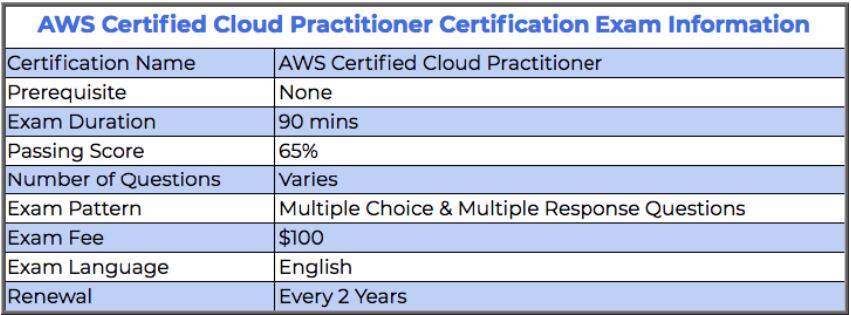
AWS Certified Cloud Practitioner CLF-C01 Exam Overview

The AWS Certified Cloud Practitioner (CLF-C01) examination is intended for individuals who have the knowledge, skills, and abilities to demonstrate basic knowledge of the AWS platform, including: available services and their common use cases, AWS Cloud architectural principles (at the conceptual level), account security, and compliance. The exam can be taken at a testing center or from the comfort and convenience of a home or office location as an online proctored exam.Also, this AWS CCP certification acts as a prerequisite alternative for Advanced Networking and Big Data Certification exams.
It validates an examinee's ability to:
  • Explain the value of the AWS Cloud.
  • Understand and explain the AWS shared responsibility model.
  • Understand AWS Cloud security best practices.
  • Understand AWS Cloud costs, economics, and billing practices.
  • Describe and position the core AWS services, including compute, network, databases, and storage.
  • Identify AWS services for common use cases.

Recommended Knowledge and Experience

Candidates have at least six months of experience with the AWS Cloud in any role, including technical, managerial, sales, purchasing, or financial
Candidates should have a basic understanding of IT services and their uses in the AWS Cloud platform

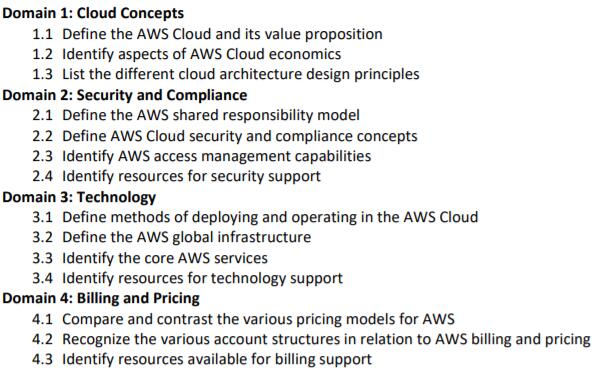
AWS Certified Cloud Practitioner Certification Content Outline


View Online AWS Certified Cloud Practitioner CLF-C01 Free Questions

1.Under the shared responsibility model, which of the following is the customer responsible for?
A. Ensuring that disk drives are wiped after use.
B. Ensuring that firmware is updated on hardware devices.
C. Ensuring that data is encrypted at rest.
D. Ensuring that network cables are category six or higher.
Answer: C
2.The use of what AWS feature or service allows companies to track and categorize spending on a detailed level?
A. Cost allocation tags
B. Consolidated billing
C. AWS Budgets
D. AWS Marketplace
Answer: C
3.Which service stores objects, provides real-time access to those objects, and offers versioning and lifecycle capabilities?
A. Amazon Glacier
B. AWS Storage Gateway
C. Amazon S3
D. Amazon EBS
Answer: C
4.What AWS team assists customers with accelerating cloud adoption through paid engagements in any of several specialty practice areas?
A. AWS Enterprise Support
B. AWS Solutions Architects
C. AWS Professional Services
D. AWS Account Managers
Answer: C
5.A customer would like to design and build a new workload on AWS Cloud but does not have the AWS-related software technical expertise in-house.
Which of the following AWS programs can a customer take advantage of to achieve that outcome?

A. AWS Partner Network Technology Partners
B. AWS Marketplace
C. AWS Partner Network Consulting Partners
D. AWS Service Catalog
Answer: C
6.Distributing workloads across multiple Availability Zones supports which cloud architecture design principle?
A. Implement automation.
B. Design for agility.
C. Design for failure.
D. Implement elasticity.
Answer: C